Insight
The back office is where the promise becomes operations
Customers see the final experience; internal teams live in the back office. If it is slow or confusing, operations feel it first.
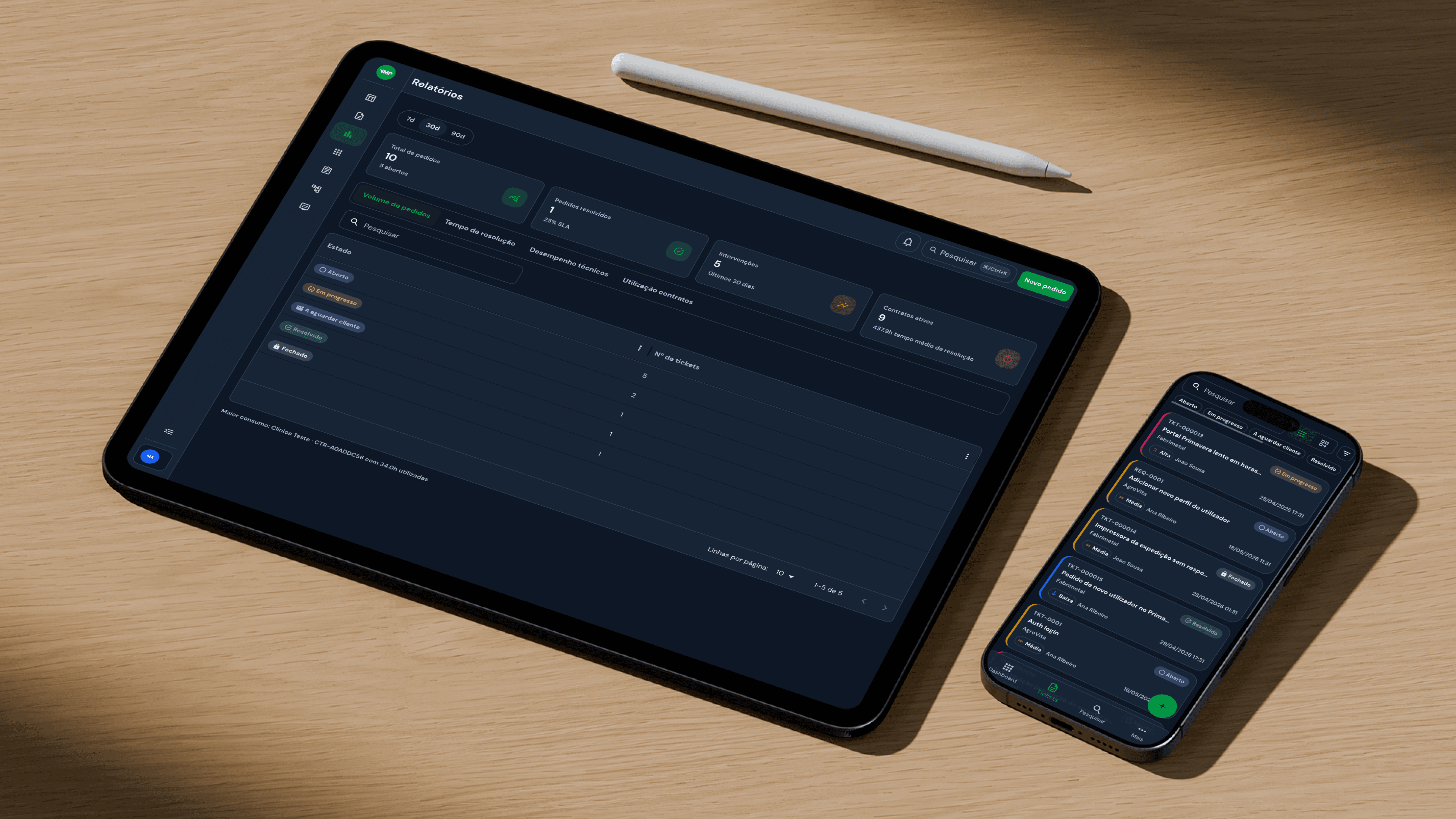
When people talk about software, they usually look first at the visible part: the app, the portal, the customer area, the public experience. But in many businesses, the promise made to the customer is only kept because someone, somewhere else, can approve, correct, prioritise, ship, reschedule or handle exceptions.
That place is the back office. And when the back office is treated as a secondary administrative area, operations pay the price every day: more clicks, more doubts, more phone calls, more decisions outside the system.
It is not just administration
A good back office is not a table with buttons. It is a working tool. It should show what needs attention, hide noise, explain statuses, prevent mistakes and make it clear who can do what. The team should be able to act without memorising hidden paths.
- Clear statuses, so nobody has to ask “where does this stand?”.
- Actions in the right context, close to the information that justifies them.
- Filters and search designed for the real routine, not for the database.
- Enough history to reconstruct decisions.
- Permissions that protect the operation without blocking the people who need to act.
Design for repetition
Internal tools are used many times a day. Small friction becomes accumulated cost: a field that forces copy-paste, an ambiguous status, a hidden action, a list with no priorities. The detail that looks minor in design becomes large when it happens a hundred times a week.
That is why design should start with the routine: who comes in, what they look for, which exceptions they solve, which decision they need to make and which system needs to be updated next. The back office should follow that rhythm.
Production starts here
When the back office is clear, operations gain speed without relying on informal shortcuts. When it is confusing, the team creates parallel spreadsheets, message groups and rules of thumb. The software still exists, but truth escapes from it.
The quality of the external experience often depends on the internal tool nobody sees.
That is why we treat back offices as products, not appendices. They are where the idea meets the operation, and where the promise stops being an interface and becomes a delivered service.